 ENGLISH
 KOREAN
 Spanish
 RUSSIAN
 Armenian
 FILIPINO
 Chinese (Simplified)
 Chinese (Traditional)

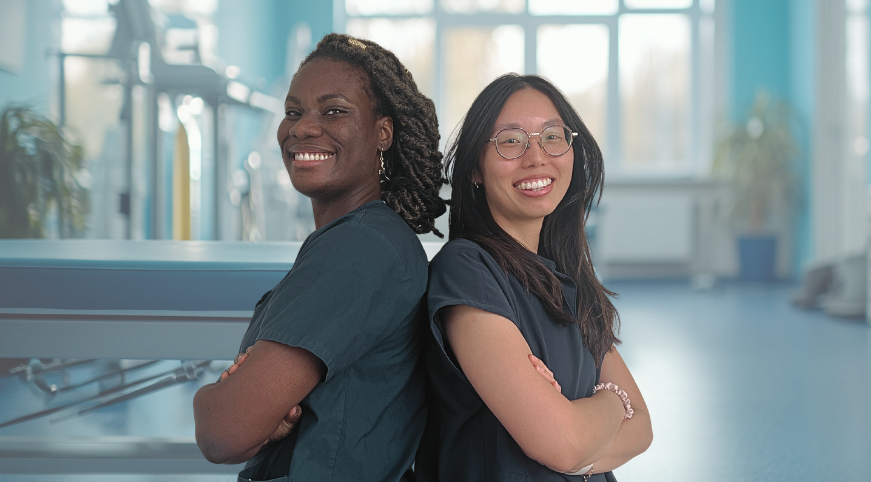
Occupational therapy plays a vital role in helping patients regain independence after illness or injury. In recognition of National Occupational Therapy Month, we spoke with two of our inpatient rehabilitation occupational therapists, Thelma Iwuchukwu and Ke Wen (Jasmine) Kuo, about their work, their patients, and what recovery really looks like.
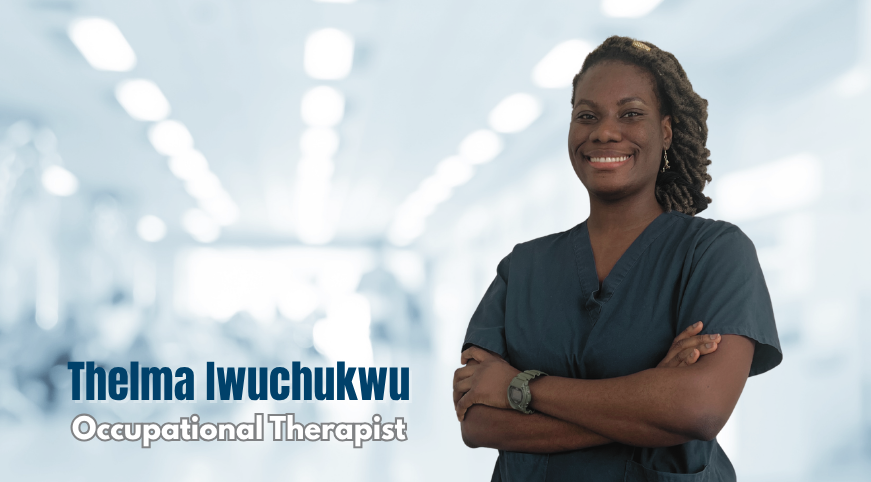
With nearly four years of experience, Thelma brings a strong focus on comprehensive, patient-centered care. Jasmine, who has been practicing for about three years, is passionate about helping patients rebuild independence through meaningful daily activities.
Q: Can you briefly introduce yourselves and your roles?
Thelma: I’m an occupational therapist in the inpatient rehabilitation unit. We work with patients who have neurological and physical deficits, and our goal is to help them regain as much independence as possible so they can return to their daily lives or improve their overall quality of life.
Jasmine: I’m also an occupational therapist in the rehab unit. We focus a lot on self-care and independence. Many of our patients have had strokes, fractures, or traumatic injuries and are unable to take care of themselves when they first arrive, whether it’s getting dressed, using the bathroom safely, or showering. We help them rebuild those skills so they can return home safely.
Q: What inspired you to become occupational therapists?
Thelma: I’ve always been interested in healthcare, and during undergrad, I was on a pre-med track and initially planned to become a physician. Over time, I realized that path wasn’t the right fit, so I began exploring other healthcare professions.
At the time, I was especially interested in mental health, and I learned that occupational therapists have the opportunity to work in that area. What really drew me in was how the field combines hands-on, activity-based work with a strong focus on improving a patient’s quality of life. It felt like the perfect balance of everything I was looking for.
Jasmine: I was originally on a similar path in healthcare, but I was looking for something more interactive and centered around helping others in a more direct way. After being introduced to occupational therapy through a friend and gaining experience through volunteering, I realized it was a great fit.
During my training, I completed a hospital internship and found it especially rewarding to work with patients who had complex needs. That experience confirmed my decision to pursue this field.
Q: What types of patients do you typically work with?
Thelma: We see a wide range of patients in the inpatient rehabilitation setting. Many of our patients have neurological conditions such as stroke, spinal cord injuries, and traumatic brain injuries. We also see patients with orthopedic injuries, including fractures from falls or car accidents.
We also work with patients who are deconditioned or have underlying medical conditions, including heart-related issues or other comorbidities.
Most of our patients come to us after the acute phase and are able to tolerate about three hours of therapy per day. The goal is for them to discharge home or transition to the next level of care. If they are not able to tolerate that level of therapy, they may be discharged to a nursing facility where therapy is less intensive.
Q: What does occupational therapy focus on?
Thelma: In occupational therapy, “occupation” refers to the meaningful activities people do every day. That includes basic daily activities like dressing, brushing your teeth, and showering, as well as more complex tasks like driving, working, or taking care of others. We break these activities down and help patients rebuild the skills they need step by step.
Jasmine: I often explain that “occupation” refers to the things that occupy your time in daily life, activities that are meaningful to you. It’s not just about work. Our goal is to help patients return to those activities as independently and safely as possible.

Q: How is occupational therapy different from physical therapy?
Jasmine: Physical therapy focuses on improving movement, such as strength, balance, and walking. Occupational therapy focuses on how those movements translate into everyday tasks.
For example, using the bathroom requires multiple steps—walking, sitting and standing, managing clothing, and maintaining balance. We address each of those components so patients can safely and independently complete the entire activity.
Q: What kind of tools or techniques do you use?
Thelma: We teach patients how to use adaptive equipment to compensate for their deficits. For example, if someone cannot use their arm properly, we introduce tools that help them get dressed or complete daily tasks safely.
Jasmine: We also teach strategies. For example, if a patient has limited use of one arm after a stroke, we show them how to complete tasks using one hand or modify how they approach activities.
Q: What do you find most rewarding about your work?
Thelma: What I find most rewarding is the day-to-day—just interacting with people. In this unit, it often feels like a small community. You see patients daily, sometimes for weeks or even months, and it’s meaningful to be able to bring some levity, joy, or relief to their day and help lift their spirits.
At the same time, because this is an intensive therapy setting, you really get to see their progress. Patients may come in with very low energy and limited tolerance for activity, but over time, they improve. By the time they leave, they’re able to stay active longer, get dressed independently, and move safely from one place to another. Being able to see that progress in real time is something I really value.
Jasmine: I agree. Seeing patients’ progress is one of the most rewarding parts of our work. From when they first arrive to when they’re ready to discharge, the improvement can be significant, and it’s very fulfilling to be part of that journey.
At the same time, it’s often the small, everyday moments that stand out. Helping someone brush their teeth or use the bathroom may seem simple, but these are essential activities that we often take for granted. Being able to help patients regain those abilities makes our work incredibly meaningful.
Q: What are your professional goals?
Thelma: I want to continue developing a more comprehensive understanding of patient care by learning from other disciplines and understanding the full picture of each patient’s condition.
Jasmine: I want to keep learning and growing as a therapist. There are many specialty areas in occupational therapy, and I’m interested in continuing to build my expertise.
Go to our Blog


최신댓글